


Wireless interference is often discussed as a single concept, but real-world environments are far more specific. A classroom behaves differently from a home, and a controlled workspace behaves differently from both. Each environment has its own communication density, device behavior patterns, and sensitivity level.
This is why modern signal control is moving toward context-based tools such as a Classroom-specific cell phone signal jammer, Low-power cell phone jammer for home, Mobile phone jamming device, and remote control signal jammer. Instead of broad disruption, the focus is shifting toward precise, situational control.
Different spaces generate different communication problems. A one-size-fits-all approach to wireless control often creates unnecessary disruption or fails to address the actual issue.
A Classroom-specific cell phone signal jammer is designed around a very specific environment: structured learning spaces where attention and communication discipline matter.
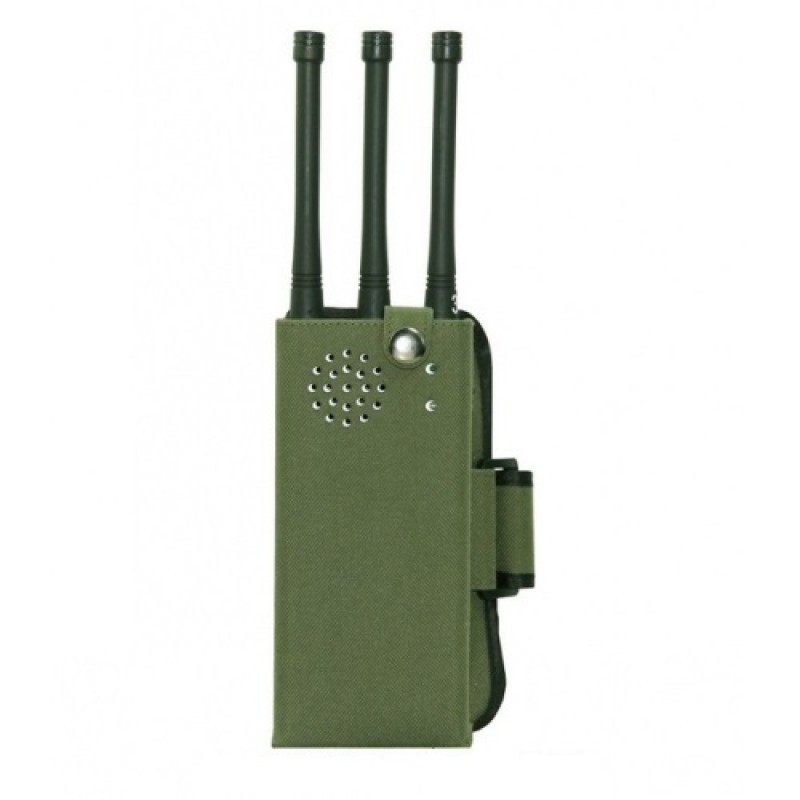
Classrooms are not high-security zones, but they are high-focus environments. The issue is not external threats, but internal distraction from mobile devices.
Phones in classrooms typically create three types of disruption:
A classroom-focused approach aims to reduce these disruptions without extending interference beyond the intended space.
Unlike general signal disruption systems, classroom-specific control relies on clearly defined spatial limits. The goal is containment, not expansion.
Classroom environments operate on schedules. Signal control can align with lesson periods rather than continuous operation.
A Low-power cell phone jammer for home represents a completely different use case. Unlike structured institutions, homes require balance between connectivity and controlled quiet zones.
Modern homes include:
This creates overlapping communication layers even in small spaces.
High-intensity control is unnecessary in residential environments. Low-power design supports localized influence rather than whole-building disruption.
Instead of managing an entire household, the focus is often on individual rooms such as:
This creates a more adaptable and less intrusive control model.
A Mobile phone jamming device is a broader category that refers to systems designed to influence mobile communication activity in general environments.
https://www.signaljammerphone.com/cell-phone-jammers.html
Unlike environment-specific tools, general devices are often used where conditions vary or cannot be predicted in advance.
In public or semi-public spaces, the number of active mobile devices can fluctuate rapidly, making flexible signal management more relevant than fixed solutions.
Mobile signals interact with multiple network towers and frequency bands, meaning control effectiveness depends heavily on environmental conditions.
A remote control signal jammer introduces a different design philosophy: user-triggered activation rather than continuous operation.
https://www.signaljammerphone.com/remote-control-car-lock-jammers.html
Wireless environments are dynamic. Constant operation is often unnecessary and inefficient. Remote activation allows control only when specific conditions require it.
Examples of use-based scenarios include:
Remote systems separate “device readiness” from “device activation,” making them more adaptable to changing conditions.
Instead of treating all environments the same, modern signal management relies on layered analysis.
Different environments produce different communication behaviors:
Classrooms, training rooms, examination spaces.
Homes, apartments, shared living spaces.
Temporary setups, mixed-use areas, changing occupancy zones.
Each tool fits a specific level of need:
One of the most important principles is spatial discipline. Signal control should remain within its intended boundaries to avoid unnecessary impact on surrounding environments.
Wireless environments are no longer uniform. They are layered, context-dependent, and constantly changing based on device density and user behavior.
Tools such as a Classroom-specific cell phone signal jammer, Low-power cell phone jammer for home, Mobile phone jamming device, and remote control signal jammer reflect a shift away from broad disruption toward context-aware control.
The future of signal management is not about stronger interference—it is about smarter alignment between environment, timing, and purpose.
https://www.signaljammerphone.com/10-antennas-handheld-5g-mobile-network-jammer-20m-p-t10.html
https://www.signaljammerphone.com/gp-l5-anti-gps-jammer-full-bands-and-bluetooth-blocker-15m.html
| コミュニティ名 | signaljammerphone |
|---|---|
| コミュニティの種類 | NPO法人 |
| ジャンル | IT・Web |
| キーワード | 単発 |
| 活動エリア | 青森県平川市 |
| 主な活動日・時間 | 不定期 |
| 活動費 |
無料 |